Oregon has the world’s largest dark sky sanctuary, and this year’s best meteor shower peaks there with zero moon in the way
Forget the lawn chair in the backyard. This August, the best seat for the year’s biggest meteor shower sits inside 2.5 million acres of protected darkness, and it’s a few hours from Bend, not a plane ride away.
DarkSky International named the Oregon Outback the largest International Dark Sky Sanctuary on the planet in 2024, covering Lake County’s high desert in southeastern Oregon. Few trees, almost no light pollution, and some of the driest air in the state add up to skies that rate near the top of the scale astronomers use.
Psst — we made you a West Coast Adventure Map. Nearly 1,900 of our favorite spots, already pinned, ready to load into Google Maps in two clicks — grab it here.
This year’s Perseids have nothing to compete with
The Perseid meteor shower peaks the night of August 12 into the morning of August 13, 2026, and the moon happens to be new that same night. No moonlight means no wash-out, and under a genuinely dark sky, that can mean up to 100 meteors an hour.
Most years, some sliver of moon steals part of the show. This year, the sky has nothing else competing for your attention.
📍 GET THE ULTIMATE PNW MAP 🗺️
Get our curated list of the best adventures, things to do, and places to grab a brew loaded onto your maps with just two clicks!
✅ Waterfalls ✅ Hikes ✅ Viewpoints
✅ Craft breweries ✅ National Parks ✅ 1400+ Pins


Fort Rock is the easiest way into that darkness
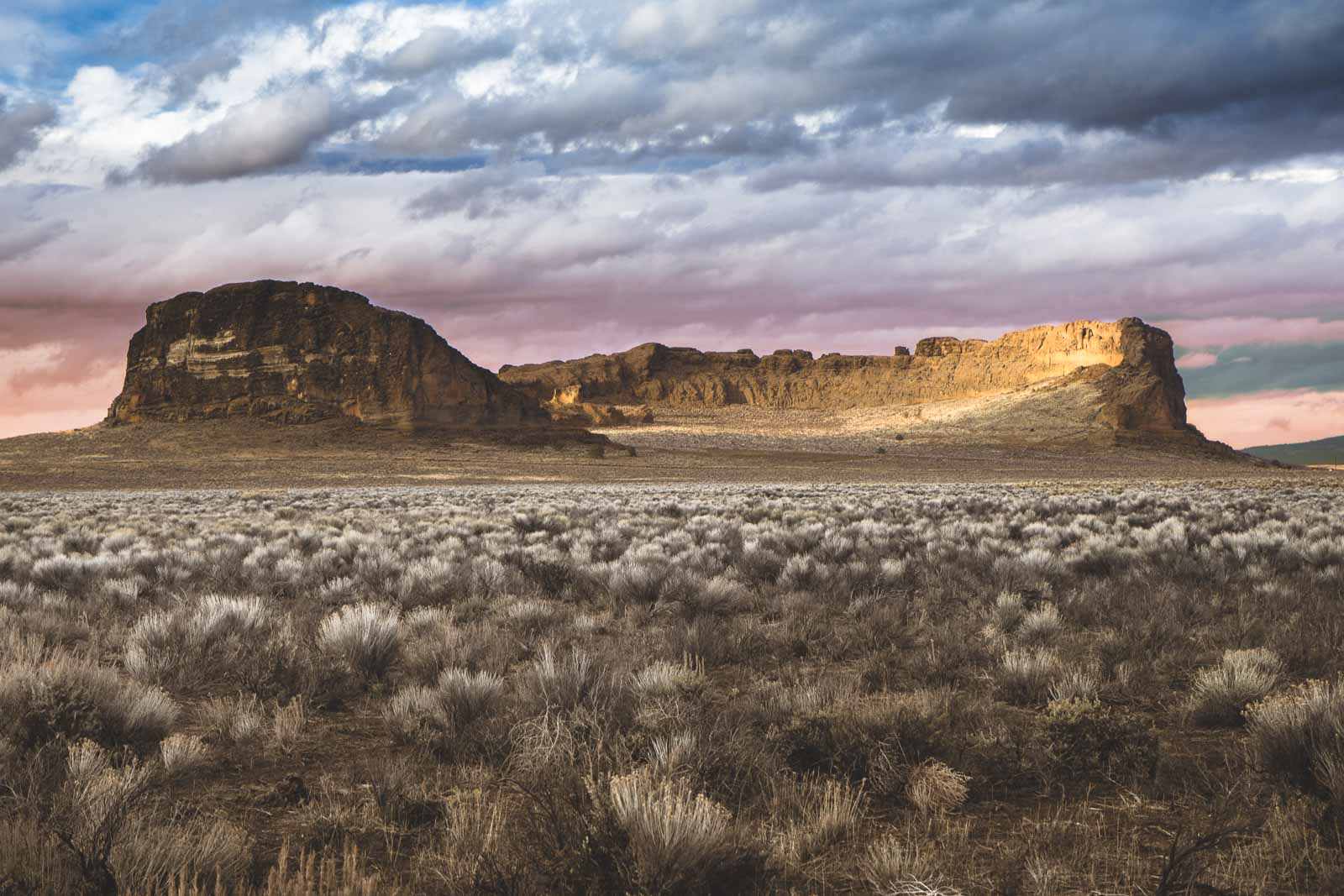
Fort Rock State Natural Area sits just outside the sanctuary’s official boundary, but its skies still rate Bortle Class 1, as dark as the scale goes. The rock itself is an ancient volcanic tuff ring that rose out of an Ice Age lakebed, and it turns into a serious silhouette once the stars take over.
It’s about 68 miles from Bend, close to an hour and a half south on Highway 97 and OR-31. That’s close enough for a night trip and far enough that the glow of town disappears behind you.
Staying past closing to catch the meteors requires a free stargazing permit from Oregon State Parks. Print it, fill it out, and leave it on your dashboard, and you can stay up to two hours after the gates close.
Where to post up for the night
Paisley and Lakeview anchor the edges of the sanctuary, both with small motels if a real bed matters more than a tent after a night of neck-craning. The rest of the Outback, spread across the larger Eastern Oregon high desert, is mostly public land with first-come camping and not much else.
Cell service disappears fast out here, so download offline maps before you go and fill your gas tank in Bend or La Pine. Bring a headlamp with a red-light setting; it protects your night vision and doesn’t wreck anyone else’s view either.
If you want to go deeper
Hart Mountain National Antelope Refuge sits further into the sanctuary’s reach, with three free campgrounds on a first-come basis and even fewer people around. A permit is required for backcountry hiking and fires aren’t allowed, but pronghorn antelope and bighorn sheep make up for the lack of a campfire.
The Perseids come back every August, but a new moon lined up with the peak night doesn’t happen often. Worth setting an alarm for the 12th?
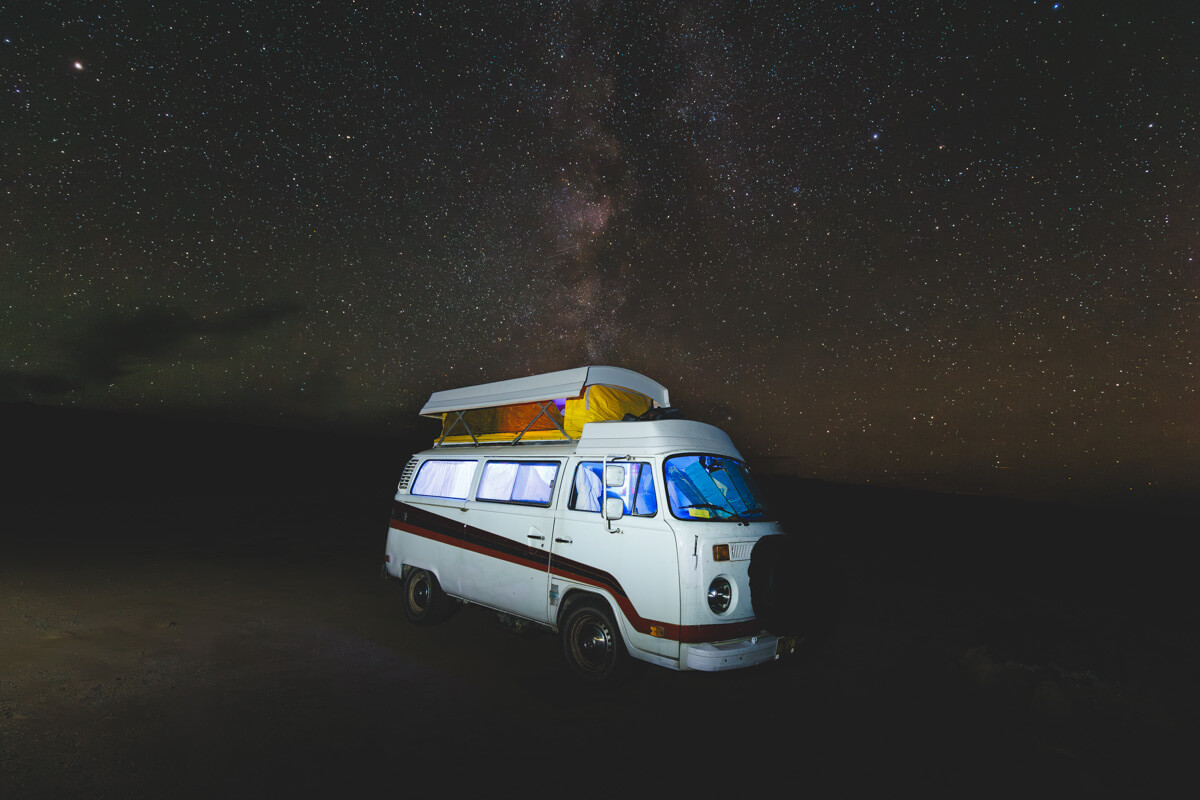
Trip tips: grab a rental car to make the drive south, book a hotel in Bend or Lakeview if you’d rather sleep indoors, or skip both and take a camper van straight into the dark.
Rules and fees change — always confirm current requirements before you go.