Bagby Hot Springs’ wooden tubs are hand-carved from single cedar logs, and a volunteer group is the only reason they still stand
A prospector named Bob Bagby stumbled onto these hot springs while working the woods east of Estacada in 1880, and the wooden tubs bathers soak in today aren’t original — they’re hand-carved replacements, built one at a time by a volunteer group after the first bathhouse fell apart. Found by accident, kept alive by people who cared enough to rebuild it themselves: that’s the whole story of Bagby Hot Springs in two sentences.
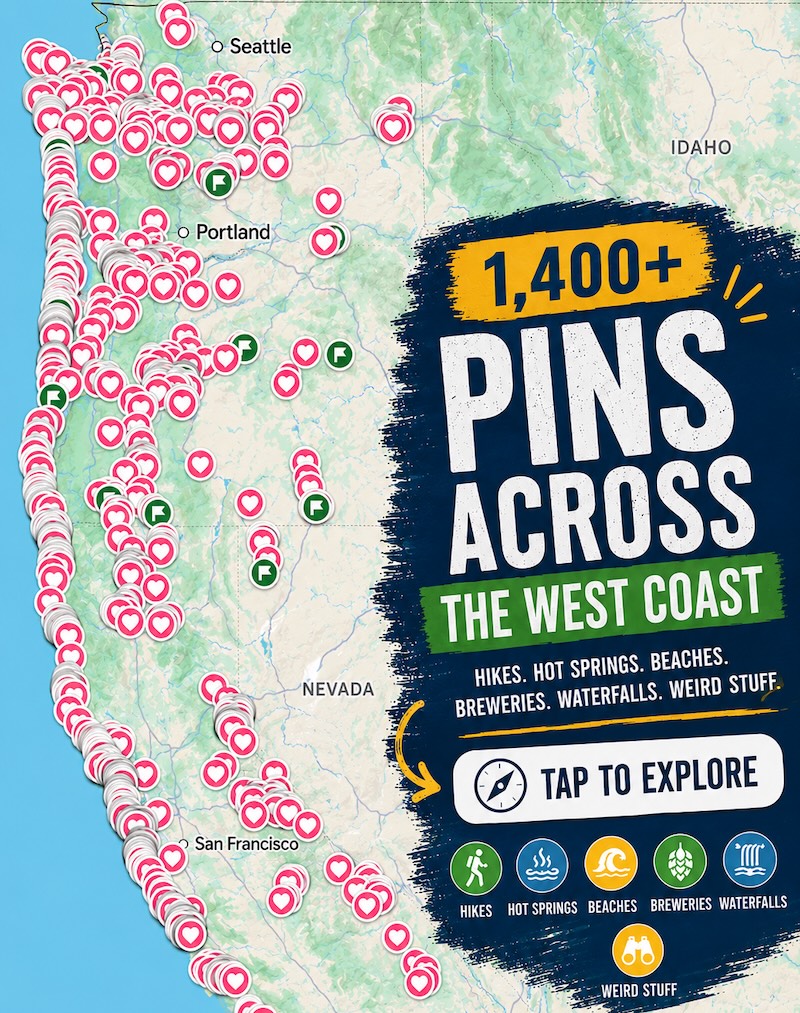
Psst — we made you a West Coast Adventure Map. Nearly 1,900 of our favorite spots, already pinned, ready to load into Google Maps in two clicks — grab it here.
A mile and a half through old growth, no shortcuts
Bagby sits about 40 miles southeast of Estacada in Mount Hood National Forest, and the only way in is on foot. The trail from the parking area to the springs runs roughly 1.5 miles each way — close to 3 miles round trip — with a gentle 275 feet of climbing, per AllTrails.
It’s an easy walk by Cascades standards, following an old-growth corridor along a tributary of the Clackamas River. Budget about an hour each way if you’re not rushing, longer if you’re hauling a cooler for after.
📍 GET THE ULTIMATE PNW MAP 🗺️
Get our curated list of the best adventures, things to do, and places to grab a brew loaded onto your maps with just two clicks!
✅ Waterfalls ✅ Hikes ✅ Viewpoints
✅ Craft breweries ✅ National Parks ✅ 1400+ Pins


Hand-carved tubs, and water hot enough to need cooling
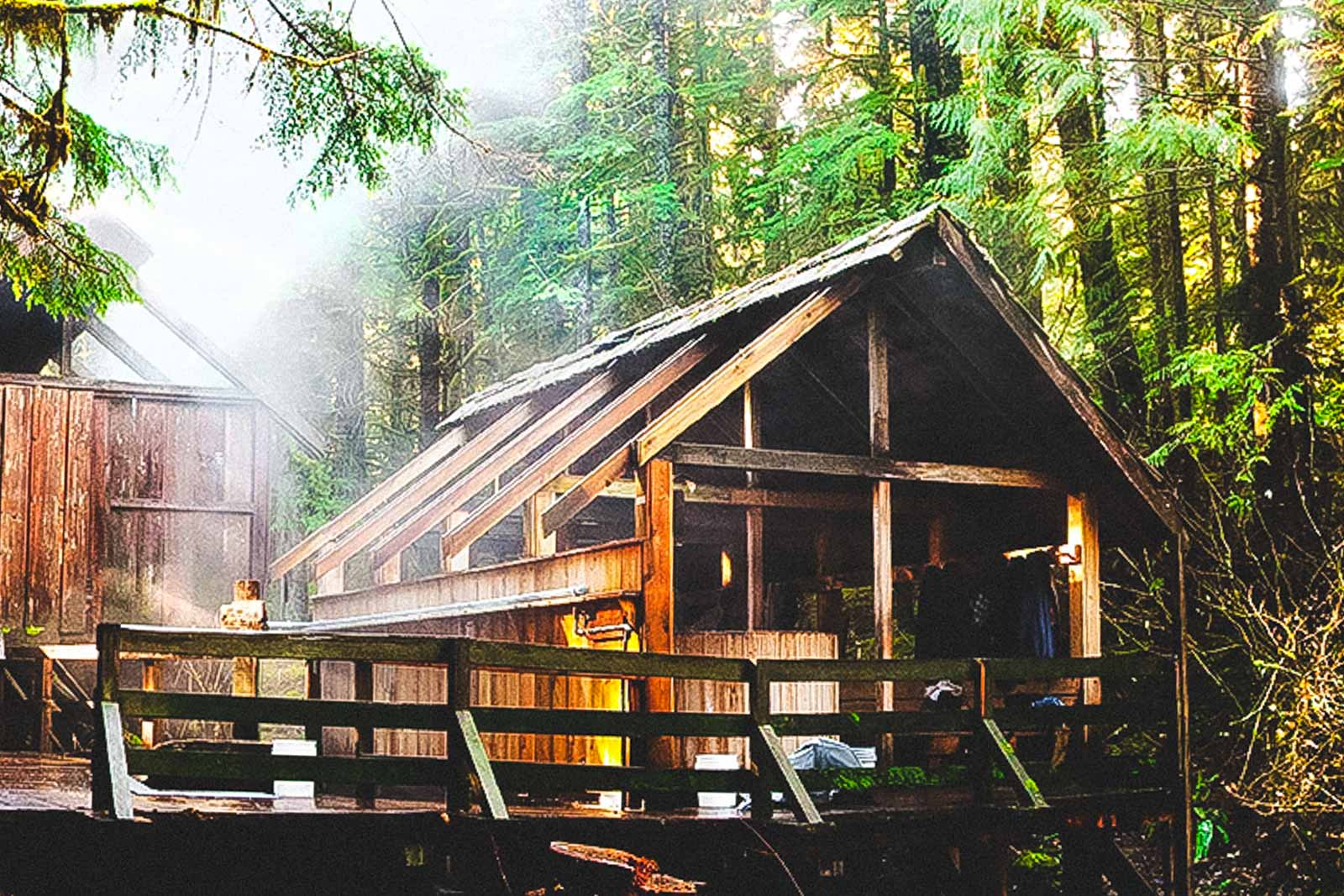
Two bathhouses split the soaking here. The lower one holds three individual log tubs plus a six-foot round communal tub; the upper one has just the single round tub, set out on an open deck.
All of it runs off a spring that puts out 24 gallons of 138-degree water a minute, which is exactly why bathers are asked to fill their tub half full and let it cool before getting in. A Forest Service guard built a cabin and small bathhouse here back in 1913, and a summer fire crew added a barn, dam, and plumbing through the 1920s — every one of those original structures eventually fell apart, and it’s a volunteer nonprofit called Friends of Bagby that rebuilt the bathing facilities piece by piece into what stands today.
The $5 fee, and the pass that won’t cover it
Soaking costs $5 per person, paid at the trailhead — cash only, since there’s no service out here to run a card reader. Forget cash, and the Ripplebrook Store back on Highway 224 will take a card before you head in.
Here’s the part that trips people up: no day-use forest pass covers it, not the standard parking permit, not America the Beautiful. Bagby runs entirely on that $5 per-person fee, and there’s no reservation system either — it’s first come, first served, and the Forest Service is upfront that weekends can mean a real wait for an open tub.
What else to know before you go
There’s no cell coverage anywhere near Bagby, and the forest roads getting there — FR-46 and FR-63 — see regular rockfall and landslides. Bring a paper map, tell someone your plan, and skip whatever shortcut a map app tries to route you down; the Forest Service is explicit that smaller roads out here are the wrong call.
Camping isn’t allowed at the springs themselves, but Bagby Campground sits right at the trailhead if you want to make a night of it. Dogs are welcome on leash in both the campground and the hot springs, and nudity isn’t permitted despite the backcountry reputation.
If Bagby has you wanting more, we’ve rounded up 14 more hot springs worth the trip around the rest of the state.
Trip tips: grab a rental car to get out here, lock in your hotel before the good rooms are gone, or skip both and book a camper van instead.
Rules and fees change — always confirm current requirements before you go.