Oregon’s Coast Range is about to flush with chanterelles, and picking a gallon a day won’t cost you a cent
Oregon’s Coast Range is sitting on a harvest that costs nothing to collect. Chanterelle season is a few weeks out, and on most of the public land between Astoria and Coos Bay, you can fill a gallon bag without buying a single permit.
The catch is that “most” isn’t “all,” and the exact limit shifts depending on which agency owns the dirt under your boots. Here’s what actually applies before you head into the trees.
—
Psst — we made you a West Coast Adventure Map. Nearly 1,900 of our favorite spots, already pinned, ready to load into Google Maps in two clicks — grab it here.
—
When the flush actually starts
Chanterelles turn up in Coast Range forests from late summer into November, but the real flush follows fall rain, not the calendar. The reliable window opens in the last week of September and runs through November, kicking in about a week after the first solid, soaking storm of the season.
Skip whatever pops after a light drizzle — those are often past their best by the time you spot them. Wait for a real system to move through, then give the forest floor seven to ten days to catch up before you go looking.
📍 GET THE ULTIMATE PNW MAP 🗺️
Get our curated list of the best adventures, things to do, and places to grab a brew loaded onto your maps with just two clicks!
✅ Waterfalls ✅ Hikes ✅ Viewpoints
✅ Craft breweries ✅ National Parks ✅ 1400+ Pins


How much you’re actually allowed to pick
On the Siuslaw National Forest, which covers most of the central Coast Range, personal-use mushroom picking is free and permit-free up to one gallon per person per day. Cross that line and you’re legally a commercial picker, which means a different permit entirely.
Oregon Department of Forestry land — including the Tillamook, Astoria, Forest Grove, North Cascade, and West Oregon districts — runs a different number: one gallon per vehicle, at any one time, no permit required. BLM land keeps it simple too, at one gallon per person per day. Oregon state parks are the most generous of the bunch, allowing up to five gallons per person per day for personal consumption, unless a specific park has posted otherwise.
Where the Coast Range actually delivers
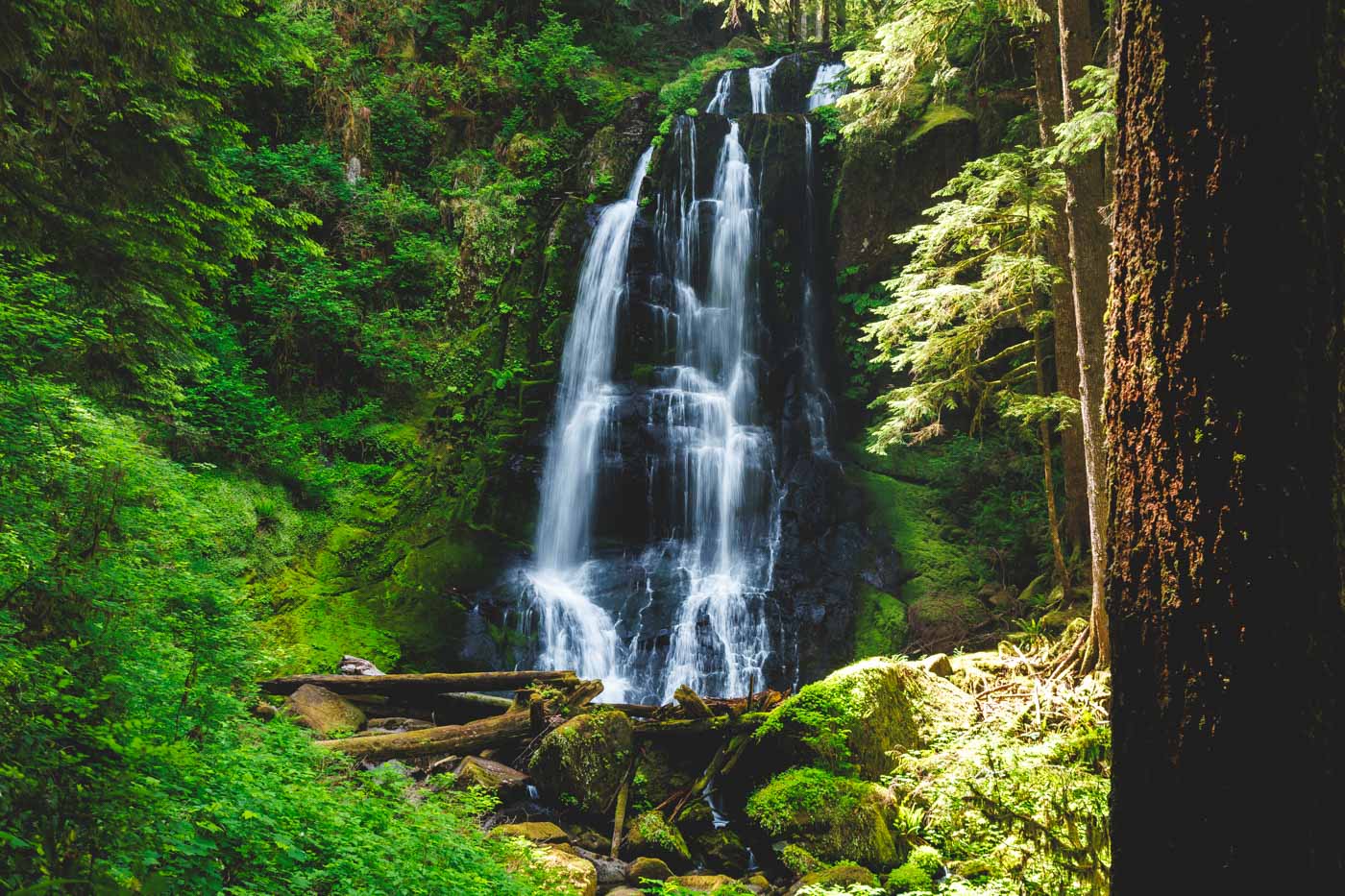
Chanterelles grow in a mycorrhizal partnership with Sitka spruce, Douglas fir, and western hemlock, so any mixed Coast Range forest with mature stands of those trees is worth a look. The Siuslaw National Forest around Mapleton and the Whittaker Creek drainage — the same general stretch as Kentucky Falls — sits right in classic chanterelle habitat.
Skip the pullouts everyone else already stopped at. A quarter mile off any active Forest Service road usually clears out the competition, and chanterelles tend to cluster — find one, and there are often five more within arm’s reach.
The rules that actually get enforced
Pluck or cut your mushrooms instead of digging them up. Disturbing the underground mycelium is what actually damages a patch for next year, not the picking itself. Matsutake mushrooms run on a separate rule everywhere in the Coast Range: up to six per person per day for personal use, and each one has to be sliced in half before it leaves the forest to strip its commercial value.
Wilderness areas let you pick and eat mushrooms on the spot, but you can’t carry them out. Skip the national parks and monuments entirely — mushroom picking is banned outright at Crater Lake and Oregon’s national monuments, no permit gets you around it.
Getting out there
Bring a mesh or open-weave bag instead of a plastic one. Chanterelles bruise fast in an airtight container, and a mesh bag lets spores scatter back onto the forest floor as you walk. A field guide or a foraging app with expert review is worth the extra weight in your pack — a few toxic lookalikes do turn up in the same habitat, and this isn’t a call to make on a hunch.
The rain’s coming, and the forest’s about to get busy. Question is whether you beat the crowd to it.
Rules and fees change — always confirm current requirements before you go.